
by Claudia Segre
THE BLOGGERS’ CORNER. Mohammed bin Salman appears to be a skilled player: he keeps the relationship with Trump open while waiting for the U.S. Senate to approve the new civilian nuclear cooperation plan; at the same time, he engages in dialogue with China, builds trade corridors with India and Europe, keeps open the prospect of normalization with Israel, and meanwhile secures the military backing of Turkey and Pakistan.
September 6, 2026, 9:25 a.m.
On the Middle Eastern chessboard, tensions show no sign of easing. Behind a game that has now stretched beyond six months between Iran and the United States lie the negotiating tables of multilateral agreements that set governments, businesses and universities in motion through cooperation, as well as armies coordinating strategies and defense systems. The Abraham Accords and the new Mecca Pact, the so-called “Islamic NATO,” embody two different approaches to regional dialogue: the former built on economic interdependence, the latter on military deterrence.
The Abraham Accords, launched in 2020, as is well known, initiated the normalization of diplomatic and commercial relations between Israel, the United Arab Emirates, and Bahrain. Morocco and Sudan subsequently joined through different paths, while Saudi Arabia remained notably absent. This opened up political space for important economic agreements between the UAE and Israel, which quickly led to direct flights, followed by investment, tourism and an effective partnership that lowered barriers and expanded cooperation across a number of areas, including energy, healthcare, food security and advanced technologies. The figures show that this was not merely a new phase in diplomacy between the two countries: over six years, cumulative trade between the UAE and Israel reached approximately $14 billion. And even during years marked by war and highly complex political tensions, commercial and technological relations continued to function. This is the most strategically interesting feature of the Abraham Accords: they have created concrete interests capable, at least in part, of surviving government crises and the persistence of tensions in the region.
And building on last year’s Strategic Mutual Defence Agreement between Saudi Arabia and Pakistan, the latest Mecca Pact came into being at the end of August. Signed last month by Saudi Arabia, Turkey and Pakistan, it follows the opposite logic, based on a mutual defense agreement under which an attack against one of the three countries is considered an attack against all. It therefore provides for political and military coordination, joint exercises and cooperation in the cyber domain, ranging from drones to artificial intelligence applied to defense and arms production. The formula is very similar to NATO’s Article 5 on collective defense, but the operational commitments are less clearly defined in this case, and it is not yet clear what response would automatically be triggered in the event of an attack.
Through the Mecca Pact, Mohammed bin Salman reinforces his role as Custodian of the Two Holy Mosques and, somewhat unexpectedly, establishes the first joint defense agreement by a GCC country outside the Gulf Cooperation Council framework, symbolically extending its boundaries. Indeed, for the first time, a GCC country has entered into a defense agreement with a nuclear power, multiplying the strategic arenas in an attempt at geopolitical “hedging” vis-à-vis the United States and bringing together two militarily strong but economically fragile countries. Pakistan, which draws on its status as a nuclear power, its military experience and its historic relationship with the United Kingdom, continues to show a fragile economic recovery and carries a very high debt burden, meaning that it needs external financial support — something the Saudis are, of course, ready to provide. The same applies to Turkey, NATO’s second-largest army, which, amid high inflation, energy vulnerability and increasingly authoritarian and repressive presidential rule, needs to “stay in the game” and is seeking a supporting role.
These are two platforms for dialogue in which, on the one hand, business and the resulting economic and social development of the countries, together with technological exchanges, form the infrastructure of peace between the parties; on the other, there is a shared commitment to security, which is seen as a prerequisite for survival. Both the Mecca Pact and the Abraham Accords contain a technological dimension oriented toward defense and do not rule out security cooperation. The fundamental difference therefore lies in their starting point: one seeks to make peace constructive; the other seeks to make war more costly and thereby deter it.
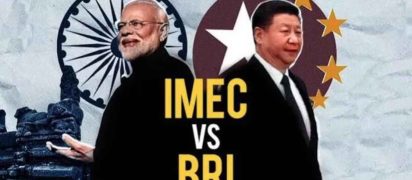
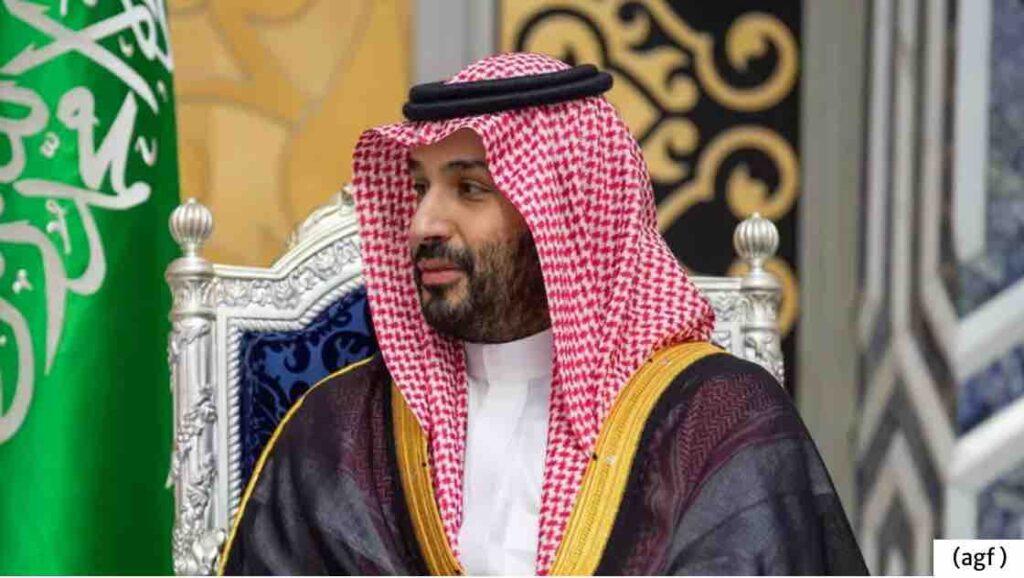
At the center of this series of simultaneous chess games stands Saudi Arabia, which has not signed the Abraham Accords, buying time with Donald Trump while fully aware of how essential they are to their possible expansion and to the regional economic vision that accompanies them. But that is not all: Riyadh is also a key partner for the IMEC corridor linking India, the Gulf countries, Israel and Europe, which would be far more difficult to develop without the Saudis. Bin Salman appears to be a skilled chess player, playing on several boards simultaneously: he keeps the relationship with Washington open while waiting for the U.S. Senate to approve the new civilian nuclear cooperation plan; at the same time, he engages with China; and then he builds trade corridors with India and the UAE to define the infrastructure of the future for his ambitious Vision 2030 plan. And, of course, he keeps the prospect of normalization with Israel open while securing the military proximity of Ankara and Islamabad.
This ability to play a “simultaneous” game is not without risks and could turn into a deadly domino effect. Consider, for instance, how the relationship with Pakistan is causing considerable concern in India, which is an essential economic partner for the Gulf countries and for IMEC. The comparison between “Abraham and Mecca” thus reveals the crossroads facing the Middle East and the ways in which security can emerge either from shared economic interests or from a shared fear of opening new fronts of war. The Abraham Accords have demonstrated that technology and trade can give diplomacy substance, while the Mecca Pact will have to prove that it is more than a declaration of military solidarity. In the meantime, Saudi Arabia will seek to keep both paths open, because Vision 2030 — its strategic plan launched in 2016 by Crown Prince Mohammed bin Salman to diversify the economy and reduce dependence on oil — requires both security and open markets.
The strength of a multilateral agreement becomes apparent when it creates a future that all parties have an interest in not destroying. It is on this ground, more than through solemn handshakes staged for the press, that the distance between Abraham and Mecca will ultimately be measured.